Posting to Facebook and posting to your blog are, at first glance, very different things. Businesses can be successful doing just one or the other, and most businesses find success doing both. However, there’s more variance to the question than you might expect.
Posting to a Blog
The default mode of web marketing for most brands is the blog. There are thousands of case studies about why brands need blogs out there, with literal decades of research backing it up. Sure, some brands are able to grow on Facebook, but eventually even they turn to blogs. Just look at IFLS, which started as a Facebook page and eventually expanded into a news site as well. They leveraged their social popularity to get a more stable platform under their control up and running.
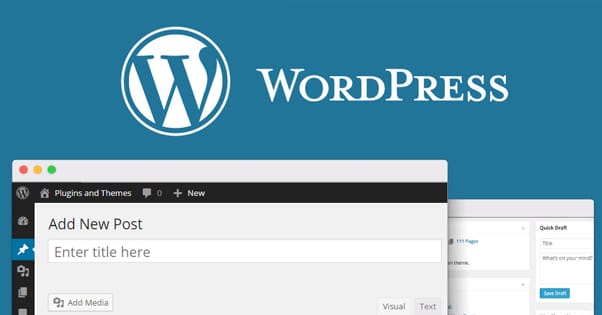 Blogs are an excellent base for content because it all exists indefinitely. Sure, some of the content is going to be time-sensitive and not valuable in the future, and it will drop off in utility, but it can still earn you links and be a hub for valuable links. The links are still valuable to you even if they drop off in traffic referrals.
 Links become tricky as well. You have to paste a link in raw, you can’t use HTML to format it with an anchor text of your choice. When you paste in a link, as well, Facebook will pull meta data and turn your post into a link post. If the link is incidental to what you wand to post, you will have to remove this preview, otherwise it looks like you’re putting a heavier advertising emphasis on the link than you are. Multiple links have similar issues to multiple images; while you can include them, you either have one set of meta data or zero, nothing else.
There are no display ads on Facebook, at least not in a way you can monetize. Ads exist, but they’re for you to buy exposure to your posts, not for you to make money. The only way to make money directly from Facebook is to run affiliate links and hope you make more than you spend to promote them.
Facebook advertising is one benefit posts have over blog entries, however. Any time you make a post that you think should have more engagement, or post a link that you think should get more clicks, you can boost it. Boosting it turns it into an advertisement – and you can create advertisements that look like posts, for the opposite effect – to get more exposure. Different ad objectives give you different benefits, so for example you can pay to get more likes, shares, and comments on your post, or you can pay to get more link clicks, or more views to a video, and so forth. However, these are all paid options, so you need to have the budget to make use of it.
Posting directly to Facebook is also subject to the Facebook filter, called EdgeRank. This determines who amongst your audience can see your post. Most brands hover around 6% of their audience, so only 6 people out of every 100 who follow you are likely to see your post. This number is higher the fewer followers you have, but as you grow it will drop.
Facebook’s algorithm is tricky to manipulate. Text posts are the bottom of the totem pole, and will get the least exposure. Time is also a huge factor, and older posts get little or no visibility whatsoever.
Facebook is also not directly indexed by Google, at least not on a wide scale. The same sort of time filtering is in place as well, so Google is highly unlikely to serve people with older social media posts, under the assumption that they’re no longer valuable. If you want to show up on Google for specific pieces of content, you virtually need to have a high quality blog.
Facebook Notes
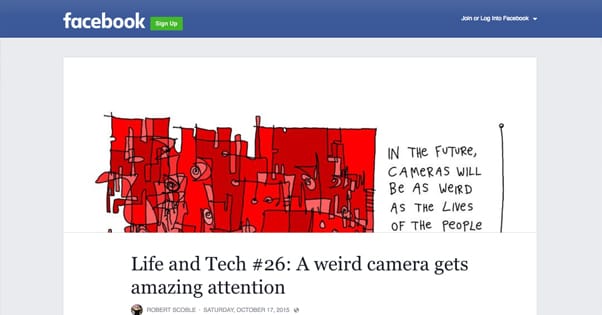
Now let’s look at something else: a note from the New York Times. See the difference between the two? This one doesn’t have a cover photo, though it does have a large embedded image at the top. It has links, but no author byline. Now let’s take a look at the NYTimes Page. Where are the notes? If you wanted to view notes from the past, you would have to find the notes entry in the left sidebar and click it to be brought to the notes feed.
This is by far the primary drawback of notes. They’re still hidden away as a side feed, not something given much promotion whatsoever. You can’t even turn a note into a promoted post, you have to make ads that link to them as a website destination, which is a clunky workaround. It’s worse for personal profiles publishing notes, who only have one location for them in the top bar and only in replacing another app tab up top.
Notes may not be truncated the way long organic posts are, but they’re hidden away behind their own drawbacks.
Facebook Instant Articles

That’s right; instant articles, a Facebook blog-equivalent service, still requires you to have a blog of your own from which to pull the published content.
So, notes work as a sort of alternative for a blog, but they lack many of the features that make a blog valuable. Instant articles work like notes, but with added blog-like features like monetization, a mailing list call to action, and an RSS feed, but they require you to have a blog of your own.
At the end of the day, Facebook is generally going to be more of a supplement to your marketing than it is the core. A blog is simply too valuable.
- Blogs are more stable. Facebook is known to update their algorithm, change their layout, or even ban people at a moment’s notice. You don’t have to worry about any of those things with a blog, you can maintain a status quo quite easily. All you have to worry about are the few Google algorithm updates and the security updates for your site infrastructure.
- Blogs have a larger payoff. You can earn money directly and indirectly. Facebook doesn’t allow you to embed ads or monetize in any way other than through Instant Articles, and even those require you to have a blog as a base.
- Blogs benefit from SEO efforts, which help pull in more traffic from Google and the other search engines. Facebook is largely not indexed, or not searched high up on the ranks without special filters to search specifically through the social network, so the content you post directly on the site is much less valuable.
- Blogs last much longer as well. A blog post can be an evergreen resource for years, while a Facebook post has a steep drop-off and is virtually valueless after a week, and might as well not exist after a month.
- Blogs give you more control over who sees your posts. Your link outreach, your paid circulation, it’s all based on your budget and who you connect with. On Facebook, you always have to content with EdgeRank, which generally doesn’t want you to succeed, at least not without paying a good chunk of change to Facebook.
It’s all about control. On a blog, control is yours. On Facebook, it’s Facebook’s. You’re there at their whim. Invest in a blog.
Comments
Post a Comment